


Real Estate Market Trends 2025–2026: What Will Change for Property Owners and Investors

Updated: Jan 5
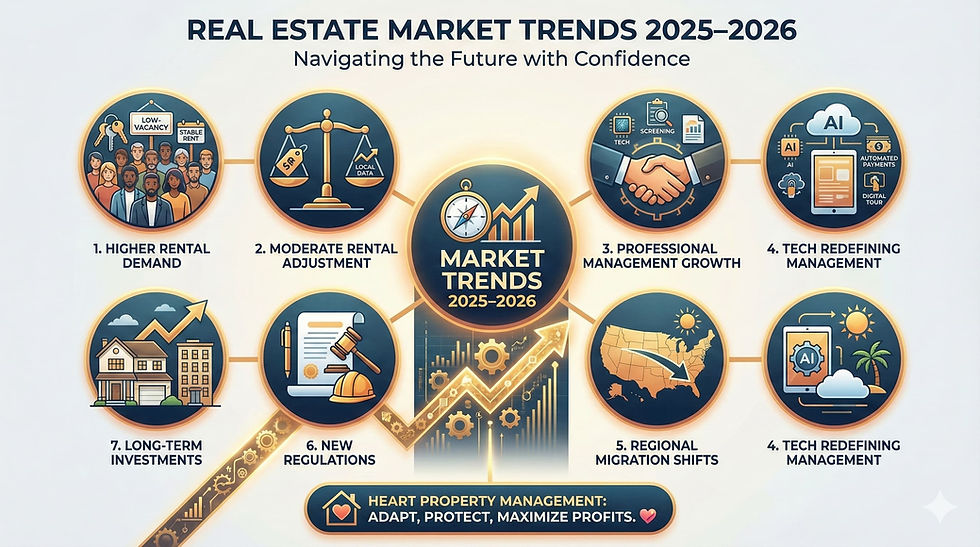
The real estate market has gone through significant shifts in recent years — fluctuating interest rates, interstate migration, rising rental demand, and new technologies that have changed how properties are bought, sold, and managed.
As we move into 2025–2026, property owners and investors are looking for one thing: clarity.
This article breaks down the most important trends shaping the coming years and what they mean for anyone looking to maintain or increase the profitability of their real estate investments.
1. Higher Demand for Rentals and Lower Intent to Buy
High mortgage rates and economic uncertainty have pushed many people to delay homeownership, boosting rental demand.
What to expect in 2025–2026:
More competition among renters
Lower vacancy periods for landlords
More stable rent prices
For property owners, this is a strong opportunity to secure reliable, long-term income.
2. Moderate Adjustment in Rental Prices
After years of rapid rent growth, the market is now stabilizing.
Why is this happening?
More balanced supply in many regions
Tenant protection regulations
Higher price sensitivity among renters
Landlords will need to rely on local data to set competitive rental prices.
3. Growing Demand for Professional Property Management
More owners are stepping away from self-management and seeking companies that offer:
Advanced technology
Thorough tenant screening
Accurate financial reports
Fast and organized customer service
Trend: Professional property management is becoming the new standard.
4. Technology Is Redefining Property Management
Tech adoption continues to accelerate across the industry.
Tools dominating 2025–2026:
Automated rent payments
Digital maintenance tracking
AI-powered pricing recommendations
More advanced screening tools
Digital inspections and virtual tours
These tools provide greater control, transparency, and efficiency for property owners.
5. Internal Migration and Shifts in Regional Demand
Migration patterns in the U.S. continue to favor states with:
Strong job markets
Lower taxes
Better climate
Higher quality of life
Southern and Southeastern states are robust markets for rentals and investments.
6. New Regulations Affecting Landlords
Rental laws are evolving in several states and cities.
What may change:
Transparency requirements
Safety and maintenance standards
Rules for security deposits and renewals
Working with a property management company that stays up to date on regulations is essential.
7. Increased Interest in Long-Term Investments
Despite economic challenges, real estate remains a stable investment option.
Investment trends for 2025–2026:
Stronger interest in single-family rentals
Demand for long-term rental properties
Multifamily properties as a consistent source of income
Investors increasingly value property managers who provide ROI analysis and strategic guidance.
Conclusion
The real estate market in 2025–2026 will be shaped by stable rental demand, technological innovation, and evolving regulations. Owners who adapt early will stay competitive, protect their investment, and maximize long-term profits.
Whether you own a single property or a whole portfolio, understanding these trends helps you make better, more informed decisions.
Heart Property is here to support you with professional management, updated strategies, and complete guidance to navigate the market with confidence.


Comments